
Starter
A professional first website for a new or small business.
£400
one-offNo VAT added
Website design for electricians comes down to trust and specifics. Before they ring, people want to know you’re registered, that you do the exact job they need and that you cover their area. Then they want your number without hunting for it. We build fast, mobile-first websites for UK electricians that make all of that obvious, from £400.
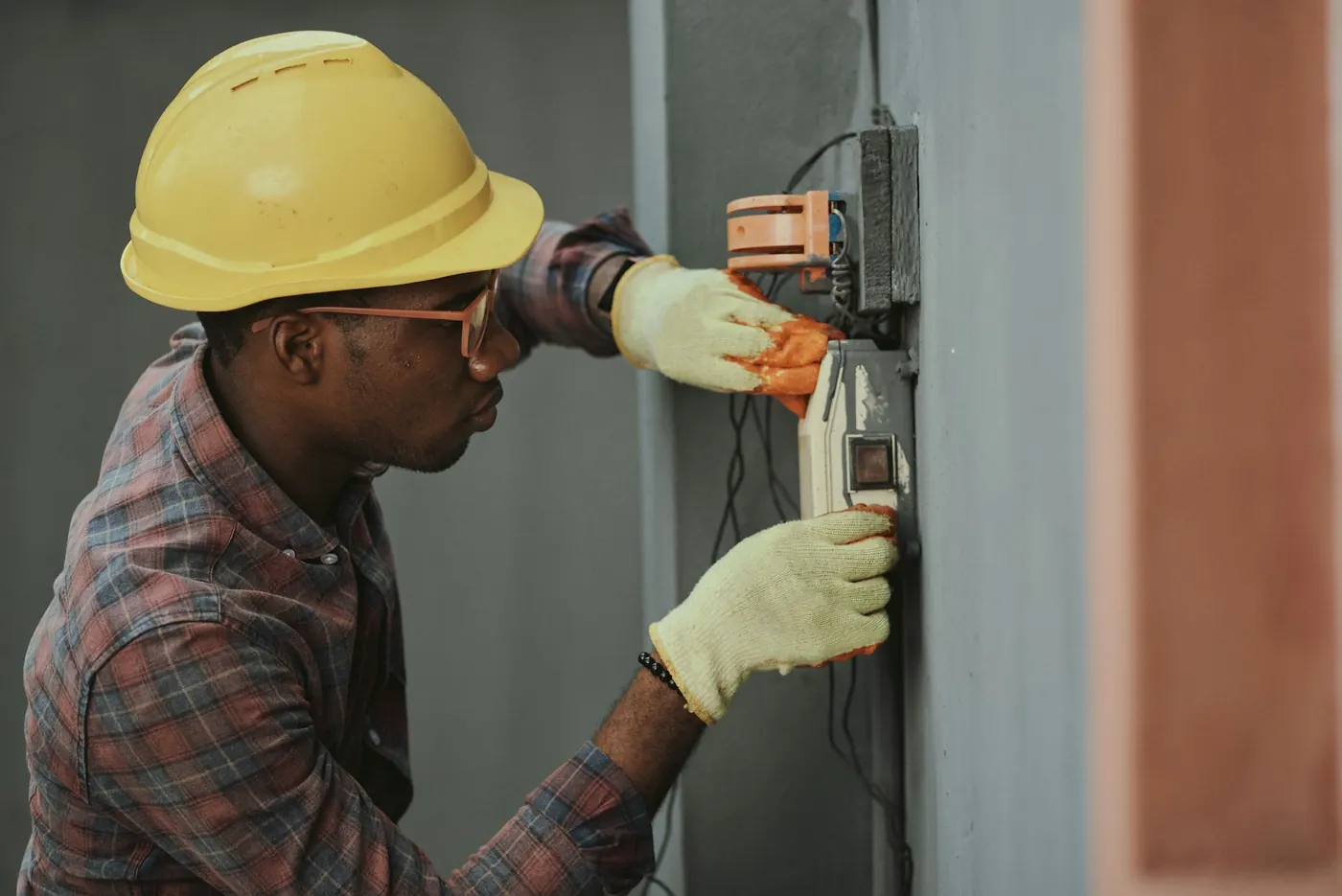
Your website has to prove two things within a few seconds of someone landing on it from their phone. Can this electrician do the job legally and safely, and do they do the job I need? Electrical work is safety-critical, and most customers know it, so they check before they call.
If you’re registered with a competent person scheme such as NICEIC or NAPIT, show it near the top of the page and in the footer. Add your registration number and a link to the scheme’s public register so customers can check it themselves. Use the scheme’s logo only in the way the scheme allows.
EICRs, EV charger installs, rewires and emergency callouts are different jobs for different customers. A separate page for each lets you explain the job properly and gives Google a clear page to show for each search. What we see on most trade websites is one “Services” page listing everything, and it struggles to rank for any of it.
List the towns and districts you work in on a dedicated areas page and in the footer. It answers the first question many customers have, and it helps you appear in searches like “electrician near me”.
Most people find a local electrician on their phone. Put a tap-to-call button in the header of every page, and a short quote form for people who would rather type than talk.
Show your real reviews, ideally ones that mention the job, such as an EICR for a rental property or a consumer unit change. Linking to your Google reviews lets customers see them in full.
Swipe the table to compare
Start with these four pages. People search for each of these jobs by name, and each job has a different customer, so each page needs different content.
| Page | Who it’s for | What to include |
|---|---|---|
| EICRs (Electrical Installation Condition Reports) | Landlords, letting agents, buyers and homeowners | What the inspection covers, roughly how long it takes for a typical property, what happens if remedial work is needed, and how to book. |
| EV charger installation | Homeowners and businesses with electric vehicles | The chargers you install, what the pre-installation survey involves, any manufacturer approvals you hold, and photos of finished installs. |
| Rewires | Owners of older homes and people renovating | Full and partial rewires, how you keep disruption down, how you quote, and what customers need to do before you start. |
| Emergency callouts | Anyone with a fault, a tripping circuit or no power | The hours you cover, the areas you’ll travel to, and a tap-to-call button at the very top of the page. |
Add pages for other work you want more of, such as consumer unit upgrades, fault finding or commercial work. One service per page beats one long list.
Here’s a concept homepage for a fictional electrician, Example Electrical Ltd. The notes alongside it explain why each element sits where it does.
For landlords, buyers and homeowners. What’s checked and how to book.
Survey, installation and the chargers we fit.
Full and partial rewires, planned around your home.
Faults and power loss. Hours and areas covered.
Real Google reviews would appear here, linked to the full profile. None are shown in this concept.
Scheme membership and the registration number sit directly under the headline, with a link to the scheme’s register, so a cautious customer can verify you without scrolling.
The phone number is a button on every page. On a phone, one tap starts the call.
Each card links to its own page, so someone searching for an EICR lands on a page about EICRs instead of a general list.
Postcode and job type up front tell you whether the job is in your area and what it is before you call back.
Town names instead of a street address reassure local customers and help you show up in local search.
Most local electrical work is found through Google, in the map results and the pages underneath them. A good website is the foundation. On top of it, these four steps are where we’d start for any electrician.
Choose “Electrician” as your primary category, list each service you offer, and if you work from home, set the profile up as a service-area business with your address hidden and your service areas added.
People search for the job, often with a town: “EICR for landlords”, “EV charger installer near me”. A dedicated, well-titled page for each service gives you a page that can rank for each.
List your business with the same name, phone number and areas on relevant directories, including your competent person scheme’s find-a-contractor listing if you have one.
A steady flow of reviews, especially ones that mention the work done, helps both rankings and trust. A short message with your review link after each job is usually enough.
Our local SEO services work through these every month. Monthly SEO packages start at £199/mo and cover your Google Business Profile, citations, on-page fixes and keyword tracking. Expect SEO to take months rather than weeks. For the do-it-yourself version, read our guide to SEO for tradesmen.
Fixed prices with everything listed. If you only need a handful of pages, Starter (up to 5) is enough. Most electricians are better served by Business or Growth, which have room for a page per service. Compare every package in full.
A professional first website for a new or small business.
£400
A fuller site for an established business that wants to win more work online.
£750
For businesses ready to compete harder in local search.
£1,200
Selling products online? Our shop packages start from £900. Compare the shop packages

The industries we work with, and how we help trades and local businesses.
Back to industries
Websites, local SEO and AI enquiry tools for every trade, plus the Trades Starter Kit.
Websites for tradespeople
Emergency-first layouts, Gas Safe details where relevant, and separate pages for leaks, bathrooms and boilers.
Website design for plumbers
Three concept designs, a page for each roofing job, before-and-after galleries and photo quotes.
Roofing website design
Websites for odd-job trades, including which electrical work is notifiable under Part P and gets passed to you.
Handyman website designYes, if you’re registered. Show your NICEIC or NAPIT membership, your registration number and a link to the scheme’s public register near the top of your site and in the footer. Use the scheme’s logo only in the way the scheme permits. It’s one of the first things a careful customer looks for before they call.
A website for an electrician costs £400 on our Starter package (up to 5 pages), £750 on Business (up to 10 pages) or £1,200 on Growth (up to 15 pages). Business or Growth usually suits electricians, because they leave room for a separate page for each service.
It helps, especially if you want landlord work. Private landlords in England must have an EICR at least every five years, and they want to know what’s inspected, how long it takes and what happens if something fails. That’s a page of its own, and it gives Google a clear match for EICR searches in your area.
Yes. Your website can list the towns and districts you cover on an areas page and in the footer, with no street address. Your Google Business Profile can be set up as a service-area business with the address hidden, so customers see where you work without seeing where you live.
Yes. The Enquiry Bot (£300 + £29/mo) is a text chatbot on your website that answers common questions and captures the customer’s name, phone number and job details, then emails each lead to you so you can call back. It doesn’t answer phone calls, so keep your number at the top of every page.
Yes, on the Business and Growth packages, which include help writing your core page copy. On Starter it’s an add-on at £120. You know the work, and we help turn it into clear pages that answer what customers ask, such as what an EICR covers or what an EV charger survey involves. Copywriting beyond your core pages isn’t included.
Tell us the work you want more of and the areas you cover. We’ll recommend a package and a page plan.
Not ready to talk? Free website check – back within 48 hours
The services you offer, the areas you cover and your current website, if you have one. We’ll reply within one business day.
A real person reviews your notes and comes back within one business day.
We go through what you need, your budget and your deadline, then tell you honestly which option fits.
Scope, milestones and pricing in writing within 48 hours of the call.