
Starter
A professional first website for a new or small business.
£400
one-offNo VAT added
Dental website design has a longer checklist than most. Patients want to know whether you take NHS patients, what treatment costs and who they’ll see, and the GDC expects some of that on your website too. We build fast, accessible websites for UK dental practices with treatment pages, a clear fees page and new-patient booking, from £400.
Swipe the table to compare
The GDC’s guidance on advertising lists what a practice website should show. Here it is as a checklist, with where we put each item. We build the page to what your practice or your compliance adviser signs off.
| What to show | Where it goes on the site | Source |
|---|---|---|
| Practice name and the address where you treat patients | The footer of every page, and the contact page | GDC guidance |
| Phone number and email address | Tap-to-call in the header, and the contact page | GDC guidance |
| The GDC’s address, or a link to the GDC website | The footer, next to your registration details | GDC guidance |
| Each dental professional’s GDC number, their qualification and the country it comes from | The team page, one profile each, linked to the GDC register | GDC guidance · GDC register |
| Your complaints procedure, and who patients can go to next | A complaints page linked from the footer: the NHS body for NHS treatment, the Dental Complaints Service for private treatment | GDC guidance |
| Whether the practice is NHS, private or mixed | A banner on the homepage, and the fees page | GDC guidance |
| The date the website was last updated | The footer, changed whenever the site is | GDC guidance |
Checked against the GDC’s guidance on advertising in October 2026. The same guidance says only dentists on a GDC specialist list may call themselves “specialist”; others can say “special interest in” or “practice limited to”. This isn’t legal advice.
Rule of thumb
NHS or mixed
If you see NHS patients, say on the homepage whether you’re taking new ones, and for whom. NHS England’s policy book requires NHS dental contractors to update their NHS.UK profile, including whether they’re accepting new NHS patients, at least every 90 days. Make the website say the same thing, and link to the NHS dental charges instead of retyping them.
Private
If you’re fully private, say so in the first screen, so NHS patients don’t spend a call finding out. Then lead with fees, plans and finance. The GDC’s standards say you must give clear information on prices on your website, and that patients shouldn’t have to ask.
These are concept homepages for three fictional practices, not client work: a mixed NHS and private family practice, a private implant and aligner clinic, and a practice that leads with emergency appointments.
No medical history here. We take that at your first visit.
The banner answers the first question most callers ask, and it matches what the practice’s NHS.UK profile says.
A four-field form: name, contact details, NHS or private, and how many people. Medical history waits for the first visit.
Each team member’s qualification, the country it’s from and their GDC number, linked to the register.
Address, GDC link, complaints procedure and the date the site was last updated sit in the footer of every page.
Your version uses your own photos, reviews and details. Nothing here is copied from a real business.
The full fees page is in the menu.
Finance details go here once your credit provider has confirmed the wording and your FCA permissions.
Private patients compare practices on price. Publishing it up front also meets the GDC’s standard on clear prices.
The hero promises what the GDC standards require anyway: a written treatment plan with a realistic indication of the cost.
Only dentists on a GDC specialist list can use “specialist”. This profile uses the wording the GDC suggests for everyone else.
The finance slot stays empty until the credit provider signs off the wording.
Your version uses your own photos, reviews and details. Nothing here is copied from a real business.
The NHS says to call 111 for urgent dental care. The banner says so, so nobody waits on a chat for help the practice can’t give tonight.
It asks for a name and number for a call back when the practice opens, and never asks what’s wrong.
Someone in pain still wants to know the cost. It’s on the emergency page, NHS and private.
When to call and how slots are given out, in two sentences, right under the headline.
Your version uses your own photos, reviews and details. Nothing here is copied from a real business.
Give each treatment you want more of its own page. Each one answers what the patient is asking: does it suit me, how long does it take, what does it cost and who will do it?
The stages from consultation to final crown, a realistic timeline, the fee or a starting fee, and who places them. Say “special interest in implants” unless the dentist is on a GDC specialist list.
How treatment works and how long it usually takes. If you’re an Invisalign provider, say so by name, because patients often search for the brand.
The GDC says only registered dental professionals can carry out whitening, working to a dentist’s prescription. Say who does it at your practice.
When you keep same-day slots, how to get one, what it costs, and what to do out of hours. The NHS says to call 111 for urgent dental care.
Each treatment page links to the fees page and to booking, so the next step is always one tap away.
The GDC’s standards say you must give clear information on prices on your website, and display a simple price list in the practice. Patients read the fees page before they ring, so make it quick to scan.
List which treatments fall in each band and link to the NHS dental charges, so the amounts are always current.
Give a fee, or a clear starting fee, for each treatment. The GDC’s standards allow a range for items that vary; “on request” isn’t clear information.
Say that every patient gets a written treatment plan with costs before treatment starts. The GDC standards require one, and it reassures people comparing practices.
NHS charges are set nationally; see nhs.uk for the current amounts. Every patient gets a written treatment plan with costs before treatment starts.
New patients need one clear way in: your online booking system, or a short registration form, linked from every page. Ask for a name, contact details, NHS or private, and how many people want to register. Medical history waits for the first appointment.
Out of hours, a text chatbot answers questions about fees, opening times and new-patient places from your own pages, and takes a name and number for a call back. It never asks about symptoms. Anyone who needs urgent help that night is pointed to NHS 111.
The Enquiry Bot is £300 + £29/mo, and the Business Bot (£600 + £49/mo) adds a booking link. Growth includes Enquiry Bot setup and the first month.
Call-back request · 8:05pm
If you introduce patients to a lender, the FCA says you’re likely to need its permission for credit broking. Finance adverts that mention a rate or the cost of credit also need a representative example.
We add finance to the site once your finance provider has confirmed your permissions, and we use the wording it signs off. Checked October 2026. This isn’t legal advice.
FCA guidance for vets and dentists offering creditPatients search for the treatment: “dental implants near me”, “emergency dentist”, “Invisalign” and a town. You win those with your Business Profile and one strong page per treatment. Copying your homepage for every nearby town is what Google’s spam policies call doorway abuse. Our local SEO services work through these steps every month, from £199/mo.
Pick the primary category that fits your practice, list each treatment as a service, keep hours current and add photos of the practice.
Implants, aligners, whitening, emergency appointments. Each page targets one search and links to fees and booking.
Your address, parking, public transport and the areas patients come from, on a single find-us page.
Ask after appointments and offer nothing in return, as Google’s review policy requires. When you reply, don’t confirm that anyone is a patient.
Dentist website design at fixed prices, with everything listed. Growth (£1,200) suits most practices: up to 15 pages for treatments, the team and fees, a booking form, local SEO setup and Enquiry Bot setup with the first month included. A small practice with a few treatments can start on Business (up to 10 pages). Compare every package in full.
A professional first website for a new or small business.
£400
A fuller site for an established business that wants to win more work online.
£750
For businesses ready to compete harder in local search.
£1,200
An online shop for selling your products directly.
From £1,500

Private clinics and physios: online booking, practitioner profiles, CQC ratings and forms that never ask about health.
Medical website design
The trades and clinics we build for, and how we help local businesses.
Back to industries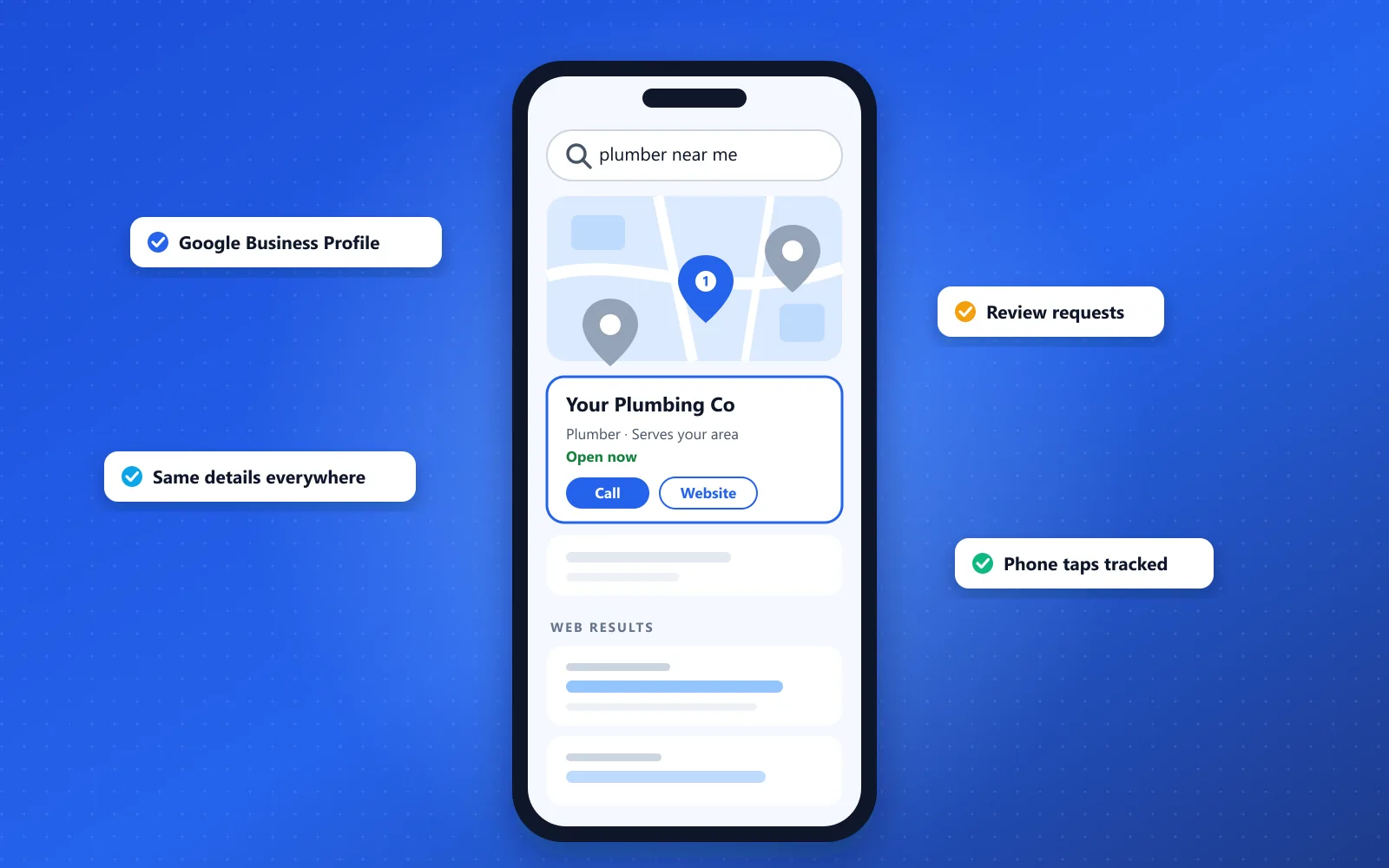
Your Google Business Profile, citations and service pages, worked on every month and reported on.
Local SEO servicesA dental practice website from us costs £400 for Starter (up to 5 pages), £750 for Business (up to 10) or £1,200 for Growth (up to 15, with a booking form, local SEO setup and Enquiry Bot setup). Most practices need Business or Growth for treatment, team and fees pages. Every price is fixed.
GDC guidance asks for the practice name and address, phone and email, a link to the GDC website, your complaints procedure, whether you’re NHS, private or mixed, and the date the site was last updated. Each dental professional named needs their GDC number and qualification, with the country it comes from.
Yes. The GDC’s standards say you must give clear information on prices on your website. List NHS treatments by band and link to the official NHS charges, and give private fees or clear starting fees for each treatment. Patients also get a written treatment plan with costs before treatment starts.
Yes, with care. If you introduce patients to a lender, the FCA says you’re likely to need credit broking permission, and finance adverts that mention a rate need a representative example. Agree the wording with your finance provider first. We publish what they sign off.
Yes. We link your online booking system from every page, or the Growth package includes a registration form that emails each request to you. It asks for a name, contact details, NHS or private, and how many people want to register. Medical history waits for the first appointment.
No. Pages that swap the town name and repeat the same content are doorway pages, which Google’s spam policies target. One page per treatment, a find-us page listing the areas you serve and a well-kept Business Profile will do more for searches like “dental implants near me”.
Partly. Our text chatbot can answer questions about opening times and emergency appointments, take a name and number for a call back when you open, and point anyone who needs urgent help that night to NHS 111. It never asks about symptoms, and it doesn’t answer phone calls.
Tell us whether you’re NHS, private or mixed, the treatments you want more of and how patients book now. We’ll recommend a package and a page plan.
Not ready to talk? Free website check – back within 48 hours
NHS, private or mixed, the treatments you offer and your current website, if you have one. Please don’t include any patient information. We’ll reply within one business day.
A real person reviews your notes and comes back within one business day.
We go through what you need, your budget and your deadline, then tell you honestly which option fits.
Scope, milestones and pricing in writing within 48 hours of the call.